Logo Types: Choose the Right One for Your Business
A word-led mark, distinctive symbol, or combined design can all support clear recognition. In our experience, the suitable direction is the one that creates a practical design and consistent visual identity without adding elements the brand does not need.
Why Your Logo Type Matters
A clear design shapes customer perception at every customer interaction, whether people see it on websites, mobile screens, social media profiles, advertisements, signs, business cards, stationery, uniforms, promotional materials, or product packaging. Each visual element should support a recognisable logo and steady brand presentation across marketing channels.
A new company may need its business name to lead, while an established business may rely more on a distinctive symbol. The right logo structure may be a text-based design or combined design, but it should strengthen brand recognition and leave room for future growth.
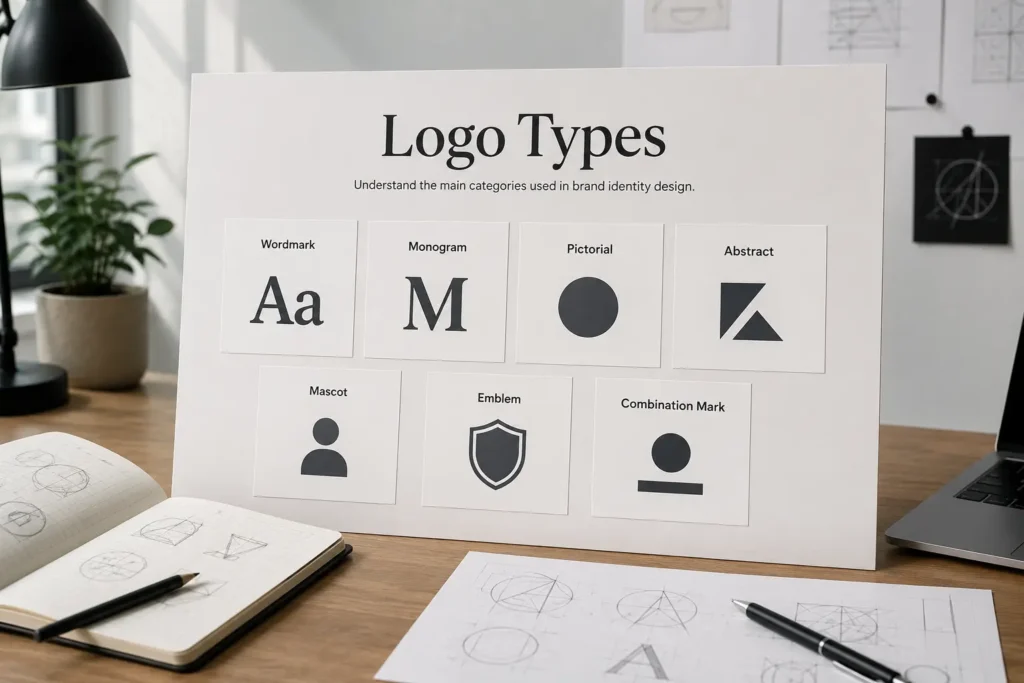
Wordmark Logos
A wordmark logo makes the full business name the main visual element, using typography, letter shapes, spacing, and proportions to build a recognisable identity. It often suits a short name, distinctive name, memorable name, or businesses with distinctive names that want stronger name recognition without a separate icon.
We often recommend a professional wordmark to new companies, technology companies, fashion brands, retail brands, personal brands, and professional services. When the brand name is handled with care, it can create an ownable identity, unique identity, and confident identity that potential customers remember.
Lettermark and Monogram Logos
A lettermark logo or monogram turns business initials, personal initials, or selected characters from multi-word names into a compact identity. Connected letters, overlapping characters, negative space, and a clear typographic structure can create a recognisable mark and shorter visual identity for a long company name.
This approach works well for companies known by initials, corporate organisations, law firms, consulting firms, construction companies, property companies, and signature brands. It keeps the business name useful in printed use and digital use without making the layout feel crowded.
Pictorial Mark Logos
A pictorial mark uses a recognisable object as the main logo element, such as an animal, plant, building, location, tool, food item, product, or familiar object. The visual concept should connect with the company name, brand identity, brand story, product, or service rather than copy competitors.
A simple symbol can become a memorable icon when it has a distinctive design and clear visual symbol. It can suit food brands, hospitality brands, product-based companies, pet businesses, animal businesses, and environmental organisations that need a memorable design people understand quickly.
Abstract Mark Logos
An abstract mark uses a custom shape, custom graphic, or original visual form instead of a real-world object. Through balance, movement, speed, growth, connection, and feeling, it can express an idea, brand value, innovation, or trust with a unique visual symbol.
This gives business freedom to technology companies, software platforms, creative agencies, modern service providers, and global businesses. Strong concept development avoids a generic design or random design and builds a unique symbol with clear company association.
Combination Mark Logos
A combination mark brings text and a visual symbol together, allowing the business name, company name, icon, brand icon, and other separate logo elements to work as one flexible identity. The visual element may stay connected for signs, websites, printed materials, packaging, and social profiles, then separate when space is limited.
This flexible option works well for startups, established companies, online shops, cafés, restaurants, beauty businesses, healthcare brands, real estate firms, and construction services. By combining a brand name with a visual symbol, it helps customers recognise and remember the business more easily.
Emblem Logos
An emblem logo places text inside an enclosed shape such as a badge, shield, crest, seal, or circle, creating a complete mark with authority, community, trust, and heritage. It can give established brands and traditional companies a detailed design that feels formal and connected.
This approach is common for schools, educational organisations, sports teams, sports organisations, clubs, community organisations, government departments, automotive businesses, security companies, and heritage-focused brands. The clear design must remain readable at small sizes, especially when the mark contains several details.
Mascot Logos
A mascot logo uses an illustrated character, person, animal, object, or fictional figure as the main business representation. The developed personality can reflect brand personality, reach the target audience, and turn an approachable company into a memorable company with a recognisable personality.
Mascots suit family-focused companies, entertainment businesses, food businesses, educational brands, and sports teams. They also support character-led marketing across advertising, promotional campaigns, social content, packaging, merchandise, and different sizes.
Initial and Symbol Logos
An initial and symbol design combines one or more letters with a meaningful element, icon, shape, or simple graphic element. Unlike a standard monogram, the letter and visual symbol work together to explain a brand idea, business activity, or design meaning in one compact mark.
This can suit startups, small businesses, local service businesses, real estate companies, creative professionals, and personal brands. The result should feel intentional rather than decorative, with each part supporting the same idea.
Negative Space Logos
A negative space logo uses an empty area inside shapes to reveal a hidden image, hidden letter, second image, or hidden message. This design construction method can join two connected ideas within one main structure, giving the mark visual meaning without adding unnecessary detail.
A thoughtful visual concept creates a clever identity, memorable identity, uncluttered design, and easy understanding across different formats. It works especially well for creative businesses, marketing agencies, technology companies, and professional services when the hidden idea remains a relevant concept.
Dynamic and Responsive Logo Systems
A dynamic logo system uses connected logo versions rather than one fixed arrangement. A detailed primary logo may lead the main identity, while a simplified secondary version, compact icon, small favicon, alternate layout, adjusted wording, or supporting graphics keep the design useful in small digital spaces and on large signs.
This responsive system supports websites, mobile apps, social profiles, and wider marketing channels while protecting brand consistency and recognisable identity. It is ideal for digital-first businesses, technology platforms, media companies, large organisations, and brands focused on long-term growth.
Which Option Is Best for a New Business?
For new businesses, a wordmark, lettermark, combination mark, or combination design can all be a practical starting point. The final decision should consider the business name, full name, company name length, industry, competitors, target audience, intended applications, future plans, and the level of brand recognition already available.
A business name and symbol often support faster customer recognition because the visual identity includes both wording and a brand icon. Still, the best structure depends on whether people need to learn the name first or recognise the image independently.
How to Choose the Right Logo Structure
After deciding which structure suits your business, consider the visual direction as well. Explore our logo styles to compare modern, minimalist, luxury, vintage, and other creative approaches.
Start with the business goal, brand requirements, and real design needs. These points help define a visual direction, identify a suitable option, and turn the logo structure into a practical choice rather than a personal guess.
Consider Your Business Name
A short business name or distinctive name may suit a wordmark, while a long multi-word name often works better as a monogram or initials. Business name length, name presentation, and the way customers say the name should guide the logo choice.
Think About Brand Recognition
A new business often benefits from strong name visibility and the full business name, while an established company may have enough customer familiarity to use a standalone icon or symbol. The right balance builds brand recognition without weakening the visual identity.
Understand Your Audience
The target audience and industry expectations should shape the visual structure. A technology platform, family restaurant, sports team, and professional consultancy need different levels of formality, energy, and customer appeal, so design suitability must begin with the people the business wants to reach.
You can also explore our logo design by industry options to see how logo needs can differ across business sectors.
Review Your Main Applications
List the main logo applications before approving a direction. Website use, social media use, a small social media image, compact formats, a sign, and large formats all require readability, scalability, and practical design. A detailed emblem may need a simplified version for smaller placements.
Study Your Competitors
Competitor research helps you understand existing businesses, competitor logos, visual patterns, similar designs, industry expectations, and market relevance. The goal is not imitation, but an original direction that creates a recognisable identity and clear competitive differentiation.
Plan for Future Growth
Avoid a product limitation that ties the identity to one offer. Design flexibility and a scalable identity support future growth, long-term brand use, new products, new services, new locations, new audiences, and wider business expansion.
What Makes a Logo Effective?
An effective logo is original, distinctive, memorable, relevant, legible, scalable, and versatile. It should give the company a clear visual identity and support brand recognition without unnecessary details or a long business explanation.
The design must work in different sizes, different formats, small applications, large applications, digital materials, printed materials, and templates. It should fit the target audience and market, stand apart from competitors and existing brands, and maintain a consistent identity wherever it appears.
Custom Logo Design for Your Business
Custom logo design starts with real business use, business needs, business name, industry, audience, and preferred direction. Our design team develops custom concepts that can explore a clean wordmark, distinctive monogram, meaningful symbol, flexible combination design, professional emblem, or memorable mascot.
Each relevant identity is planned for an attractive presentation on websites, social media, signs, packaging, merchandise, marketing materials, and business stationery. This keeps the design useful beyond the first preview and ready for daily brand use.
You can also explore our logo design portfolio to see different visual directions and completed design examples.
What You Receive
A professional logo project may include custom design concepts, a number of concepts based on the selected package, revision rounds, and included services explained in our logo design pricing and package details. Final brand assets can include colour versions, black-and-white versions, horizontal variations, compact variations, and commercial usage rights.
You may also receive scalable vector files, high-resolution files, transparent background files, website files, social media files, print-ready formats, and other useful file formats. The exact delivery depends on the selected package.
Start Your Logo Project
Share your business details, business name, market, audience, intended use, preferred logo category, and the different platforms where the identity will appear. This provides the design team with clear and practical guidance for the project.
A good logo should become a custom identity that creates customer recognition and a consistent identity in real use. Clear information at the start helps the project move toward the right result with fewer assumptions.
If you would like to know more about who we are and our approach to logo design, you can learn more about LogoPixa.
Frequently Asked Questions
These frequently asked questions provide business logo guidance, practical design information, and clear answers to common logo design questions. Use them to compare logo choices before starting a project.
What is the most common logo choice?
Combination marks are a common logo choice because they connect the business name with a visual symbol or recognisable icon. This structure supports name recognition, customer familiarity, and a complete company identity.
Which option is best for a small business?
A wordmark or combination design is often a practical choice for a small business because it gives the company name a clear presentation. The right choice still depends on the industry, audience, intended use, and the brand identity the business wants to build.
Can I use only my business initials?
Yes. A lettermark or monogram can turn business initials or a shortened name into a recognisable design, especially when the full company name or long name is difficult to fit. Customised initials are more distinctive than ordinary typed letters.
What is the difference between a wordmark and a lettermark?
The visual difference is simple: a wordmark presents the full business name, while a lettermark uses initials or selected letters. Both are a text-based logo, but their name presentation and typography solve different naming needs.
Is a symbol better than a text-based logo?
Neither design choice is always better. A symbol or recognisable icon can improve visual identity and brand recognition, while a text-based logo keeps the business name visible and supports customer awareness. The right answer depends on marketing needs.
Can a logo include both text and an icon?
Yes. A combination mark joins text, an icon, and a visual symbol through connected elements, while separate variations can be prepared for different applications. This gives the business name a clear role without limiting how the design is used.
What makes an emblem different from a combination mark?
An emblem places wording and an icon inside an enclosed design such as a badge, shield, crest, or seal. A combination mark also uses connected elements, but its separate elements can usually be rearranged more freely within the logo structure.
Are mascot logos suitable for professional businesses?
Mascot logos can work for professional businesses when the developed character fits the target audience, industry, and brand personality. A controlled illustration can create an approachable brand, memorable brand, and professional appearance without feeling childish.
Can my logo be used without the business name?
Yes, once customer familiarity and brand recognition are strong enough. A design system can include combined use for new businesses and a separate symbol, standalone icon, or icon-only version without the business name.
How many logo versions does a business need?
Most business needs are covered by a primary logo, secondary arrangement, compact icon, single-colour version, and a few practical logo variations. This supports brand consistency across websites, social media, packaging, print, and small spaces.
Will my design work on both websites and printed materials?
A prepared identity should include professional logo files for digital applications and print applications. Scalable files and vector formats protect quality retention on websites, printed materials, and displays at a large size.
How do I know which option suits my business?
A professional designer reviews the company name, industry, audience, competitors, brand personality, business requirements, and main applications. These details make the logo choice clearer and point toward a suitable direction.
Can I request a specific category before ordering?
Yes. During ordering, share examples, business information, project requirements, design ideas, preferred direction, and preferred structure. This improves designer understanding and gives the design process a clearer starting point.
Can different logo structures be explored in one project?
Different directions and logo structures can be considered during the initial concept stage when the selected package and package scope allow enough number of concepts. Design exploration then helps the team choose and develop a refined option within one project.
Why should I choose a custom design instead of a template?
A custom design creates a business-specific identity and original logo built around your needs. A reused template, common templates, or stock graphics may appear across multiple companies and similar brands, while careful design quality improves brand differentiation and supports a distinctive identity.